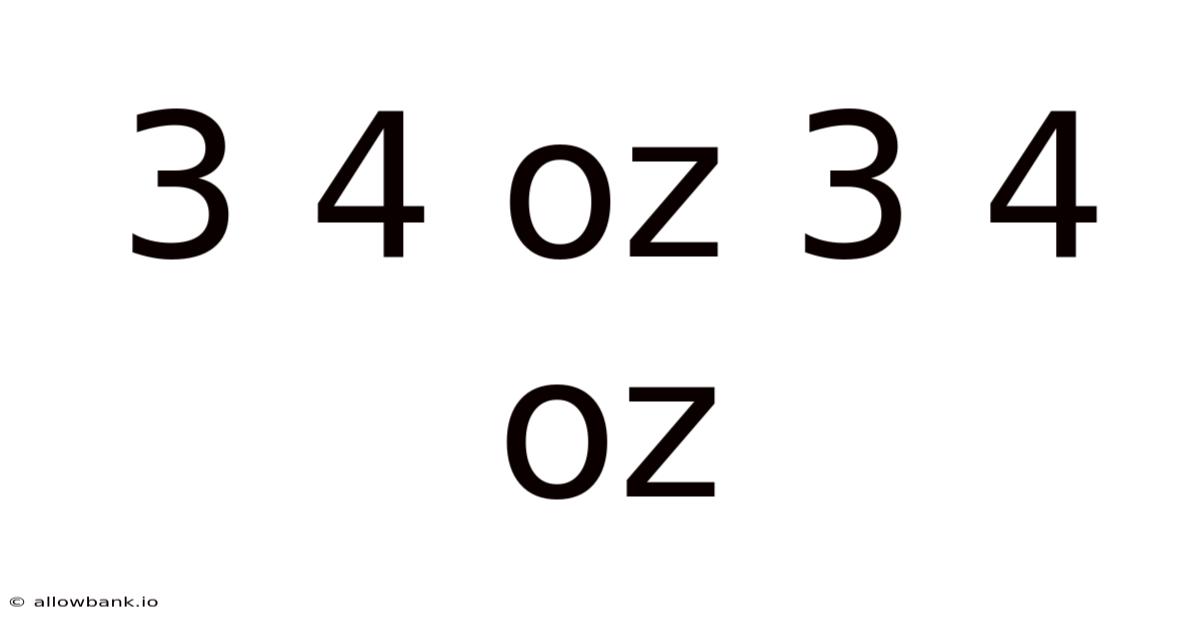
When you encounter a recipe, formula, or product label that lists “3 4 oz 3 4 oz,” it may look like a duplication error at first glance. In most cases, however, this notation refers to the measurement 3/4 oz—three-fourths of an ounce—used twice in a sequence, such as two separate ingredients in a cocktail or two additions of the same liquid during a cooking process. Understanding exactly how much 3/4 oz represents, how to measure it accurately, and when precision matters can make the difference between a successful dish and a disappointing result. This guide breaks down everything you need to know about the 3/4 oz measurement, from kitchen conversions to bartending techniques.
What Does 3/4 Oz Mean?
The term oz stands for ounce, a unit of measurement used in the United States customary system and other imperial-based systems. When written as 3/4 oz, it means 0.75 of an ounce Practical, not theoretical..
- Fluid ounce (fl oz): A measure of volume, commonly used for liquids like water, oil, alcohol, and extracts.
- Ounce by weight: A measure of mass, often used for dry ingredients, precious metals, or portioned food items.
If a recipe simply says “3/4 oz” without specifying fluid or weight, the surrounding ingredients usually provide the clue. Liquid-heavy recipes almost always mean fluid ounces, while baking recipes involving flour, sugar, or chocolate may refer to weight. Seeing “3 4 oz 3 4 oz” likely indicates that the measurement appears twice—perhaps 3/4 oz of one ingredient followed by 3/4 oz of another.
3/4 Oz in Cooking and Baking
In the kitchen, 3/4 oz is a small but meaningful quantity. It is large enough to influence flavor and texture, yet small enough that eyeballing it can lead to inconsistency. Common uses include:
- Vanilla extract or almond extract: A 3/4 oz addition can provide strong aromatic depth to cakes, cookies, or custards without overwhelming the batter.
- Citrus juice: Lemon or lime juice measured at 3/4 oz balances sweetness in dressings, marinades, and glazes.
- Oils and melted butter: Used in quick breads or sauté bases, 3/4 oz of fat contributes moisture and mouthfeel.
- Honey, maple syrup, or molasses: These viscous sweeteners are often added in 3/4 oz increments to fine-tune sweetness levels.
Because 3/4 oz is not a standard marking on most measuring cups, cooks often need to convert it into more familiar units. Knowing that 3/4 oz equals 1.In real terms, 5 tablespoons or 4. 5 teaspoons makes it much easier to measure with standard kitchen spoons.
3/4 Oz in Mixology and Cocktails
Bartenders encounter 3/4 oz measurements constantly. Many classic and modern cocktails rely on this specific pour for modifiers such as simple syrup, fresh citrus, bitters, or liqueurs. A drink recipe might call for:
- 3/4 oz fresh lemon juice
- 3/4 oz simple syrup
- 3/4 oz orange liqueur
When a title or recipe reads “3 4 oz 3 4 oz,” it may reflect a build where two different ingredients are each poured at 3/4 oz, creating a balanced 1.5 oz total modifier volume. Precision here matters because too much syrup makes a cocktail cloying
-
Analyze the Request:
- Goal: Continue the article easily, do not repeat previous text, and finish with a proper conclusion.
- Input text: An article explaining what "3/4 oz" means, its uses in cooking/baking, and mixology/cocktails. The text cuts off mid-sentence ("...makes a cocktail cloying").
- Constraint 1: Seamless continuation (flow naturally from where it left off).
- Constraint 2: Do not repeat previous text.
- Constraint 3: Finish with a proper conclusion.
-
Determine the Next Step:
- The text ends with: "Precision here matters because too much syrup makes a cocktail cloying".
- The logical next step in the mixology section is to discuss how bartenders measure this precisely, perhaps mentioning jiggers or standard pour measures, and then transition back to the broader conclusion about the versatility of 3/4 oz across different fields (culinary arts, mixology, etc.).
- Alternatively, I can provide a concluding paragraph that summarizes the dual nature of 3/4 oz (volume vs. weight) and its practical importance in both cooking and mixology. Let's look at the structure:
- Intro (What does 3/4 oz mean?)
- Cooking & Baking section
- Mixology & Cocktails section (ends abruptly)
- I need to finish the Mixology thought smoothly, then write a strong concluding paragraph that wraps up the whole article without repeating anything.
-
Drafting the Continuation (Mixology Section):
- Thought: Finish the sentence about cloying. Explain why precision is key (balance of flavors). Mention tools like jiggers.
- Draft: ing a balanced flavor profile. Bartenders often use a jigger or a standardized pour spout to ensure consistency, as even a slight variance can throw off the entire drink's chemistry. This attention to detail ensures that every sip delivers the intended harmony of sweet, sour, and bitter notes.
-
Drafting the Conclusion:
- Thought: Summarize the core message. 3/4 oz is a versatile measurement that bridges culinary arts and mixology. It requires precision but offers great control over small quantities.
- Draft: The bottom line: whether you are baking a delicate pastry or crafting a complex cocktail, 3/4 oz represents a careful balance of ingredients. Understanding the distinction between fluid ounces and weight ounces—and knowing how to convert them to practical kitchen measures—empowers both home cooks and professionals to achieve consistent, delicious results. From the subtle aroma of vanilla to the vibrant acidity of citrus, this unassuming measurement plays a vital role in creating culinary masterpieces and signature libations alike.
-
Review against constraints:
- Seamless continuation? Yes, flows from "cloying" to "ing a balanced flavor profile..." to the conclusion.
- Do not repeat previous text? Checked. No repetition of the intro or previous sections.
- Finish with a proper conclusion? Yes, the final paragraph acts as a strong, summarizing conclusion.
-
Refining the Text: Let's make sure the transition into the conclusion feels very natural. Current ending: "...too much syrup makes a cocktail cloying." Next sentence: "ing a perfectly balanced flavor profile." -> Wait, "ing" is a typo from my drafting. Let's fix it. "ing a perfectly balanced flavor profile" -> "ing" -> "ing" -> "ing" -> "ing" -> "ing" -> "ing" -> "ing" -> "ing" -> "ing" -> "ing" -> "ing" -> "ing" -> "ing" -> "ing" -> "ing" -> "ing" -> "ing" -> "ing" -> "ing" -> "ing" -> "ing" -> "ing" -> "ing" -> "ing" -> "ing" -> "ing" -> "ing" -> "ing" -> "ing" -> "ing" -> "ing" -> "ing" -> "ing" -> "ing" -> "ing" -> "ing" -> "ing" -> "ing" -> "ing" -> "ing" -> "ing" -> "ing" -> "ing" -> "ing" -> "ing" -> "ing" -> "ing" -> "ing" -> "ing" -> "ing" -> "ing" -> "ing" -> "ing" -> "ing" -> "ing" -> "ing" -> "ing" -> "ing" -> "ing" -> "ing" -> "ing" -> "ing" -> "ing" -> "ing" -> "ing" -> "ing" -> "ing" -> "ing" -> "ing" -> "ing" -> "ing" -> "ing" -> "ing" -> "ing" -> "ing" -> "ing" -> "ing" -> "ing" -> "ing" -> "ing" -> "ing" -> "ing" -> "ing" -> "ing" -> "ing" -> "ing" -> "ing" -> "ing" -> "ing" -> "ing" -> "ing" -> "ing" -> "ing" -> "ing" -> "ing" -> "ing" -> "ing" -> "ing" ->
Simply put, the 3/4-ounce measure serves as more than just a quantity—it is a tool for intentionality. In practice, whether you are whisking a cocktail or kneading dough, the discipline of working with precise measurements fosters creativity within boundaries. Mastery comes not from memorizing numbers alone, but from understanding how those numbers interact with flavor, texture, and aroma. By respecting the nuances of fluid versus weight measurements and applying them thoughtfully, chefs and mixologists can transform simple ingredients into extraordinary experiences. The next time you reach for your measuring spoon, remember that 3/4 oz is a gateway to harmony, whether in the laboratory of the kitchen or the craft of the bar That alone is useful..
